

Table of Contents
- Why Do People Bite Their Nails and What Makes It So Hard to Stop
- Understanding Psychological Triggers for Nail Biting
- The Physical Risks of Nail Biting You Need to Know
- Step 1: Identify Your Triggers and Build Awareness
- Step 2: Use Effective Nail Biting Deterrents
- Step 3: Apply Habit Reversal Training Techniques
- How Long to Break Nail Biting Habit and Stay Nail Bite-Free
- Repairing Damaged Nails and Cuticles After Biting
- Frequently Asked Questions
Last Updated: September 2, 2026
Why Do People Bite Their Nails and What Makes It So Hard to Stop
Nail biting, clinically known as onychophagia, is far more than a simple bad habit. It's rooted in psychology, sensory needs, and anxiety, making it remarkably difficult to break. The behavior serves multiple purposes simultaneously, for some it's stress relief, for others self-soothing or sensory regulation, and for many it's become so automatic that willpower alone rarely works.
Understanding why you bite your nails is the first step toward change. When you identify what need the habit meets, managing anxiety, satisfying sensory cravings, or filling boredom, you can address the root cause instead of just treating the symptom. This is why most people who try to stop without understanding their triggers fail within days or weeks.
The shame that accompanies nail biting reinforces the cycle. Stress about damaged nails triggers more biting, creating a loop that requires both practical tools and compassion.
Understanding Psychological Triggers for Nail Biting
Stress and anxiety
Stress is one of the most common triggers for nail biting. When your nervous system is activated by work pressure, social situations, or conflict, biting becomes a way to discharge tension. Anxiety works similarly, nail biting channels future-focused worry into something physical and immediate, giving your mind something to do.
The problem is that while nail biting provides temporary relief, it typically increases anxiety long-term. Seeing damaged nails reinforces shame, which triggers more biting. Understanding this cycle is essential to breaking it.
Boredom and fidgeting
Some people bite their nails primarily when bored or understimulated. The mouth and hands have lots of nerve endings, so biting provides sensory input the brain is seeking. This often happens unconsciously while watching television or in meetings. For people with this pattern, alternative fidget tools make a real difference.
Sensory regulation needs
Some people bite their nails as a form of sensory regulation, particularly those with sensory processing differences or ADHD. The pressure and sensation of biting helps regulate their nervous system. For these individuals, understanding that the behavior serves a sensory function is crucial, the solution is finding alternative ways to meet that need.
The Physical Risks of Nail Biting You Need to Know
The nail bed is delicate tissue beneath the nail plate. Repeated biting exposes it to bacteria and fungi, potentially damaging the nail matrix, the tissue where new nail growth originates. Damage here can result in permanent changes including ridges, discoloration, or deformed nails.
Paronychia, an infection of tissue around the nail, is a common complication causing redness, swelling, and sometimes pus (the American Academy of Dermatology). Chronic paronychia from repeated biting can lead to permanent scarring. Your mouth contains numerous bacteria, and introducing them into open wounds around nails creates an ideal environment for infection.
Repeated nail biting weakens nail structure, making nails thin, brittle, and prone to breaking. Cosmetic damage can take months to fully repair once you stop biting.
For children, the physical risks are similar but the psychological impact can be more significant. Kids who bite their nails often become self-conscious about their hands, affecting their willingness to participate in activities or social situations.
Step 1: Identify Your Triggers and Build Awareness
You cannot change a habit you don't understand. Start by tracking your nail biting for one week without trying to stop. Keep a notebook or use your phone to record each time you catch yourself biting, noting what you were doing, what you were feeling, and the time of day.
Look for patterns. Most people find their nail biting clusters around certain times, situations, or emotional states. You might bite more in the evening, during work, or around certain people. Once you've identified your primary triggers, you can anticipate them and plan different activities or coping mechanisms.
Approach this tracking with curiosity, not judgment. You're gathering information that will help you solve the problem.
Step 2: Use Effective Nail Biting Deterrents
Deterrents work by making nail biting less appealing or interrupting the automatic habit loop. Different deterrents work for different people.
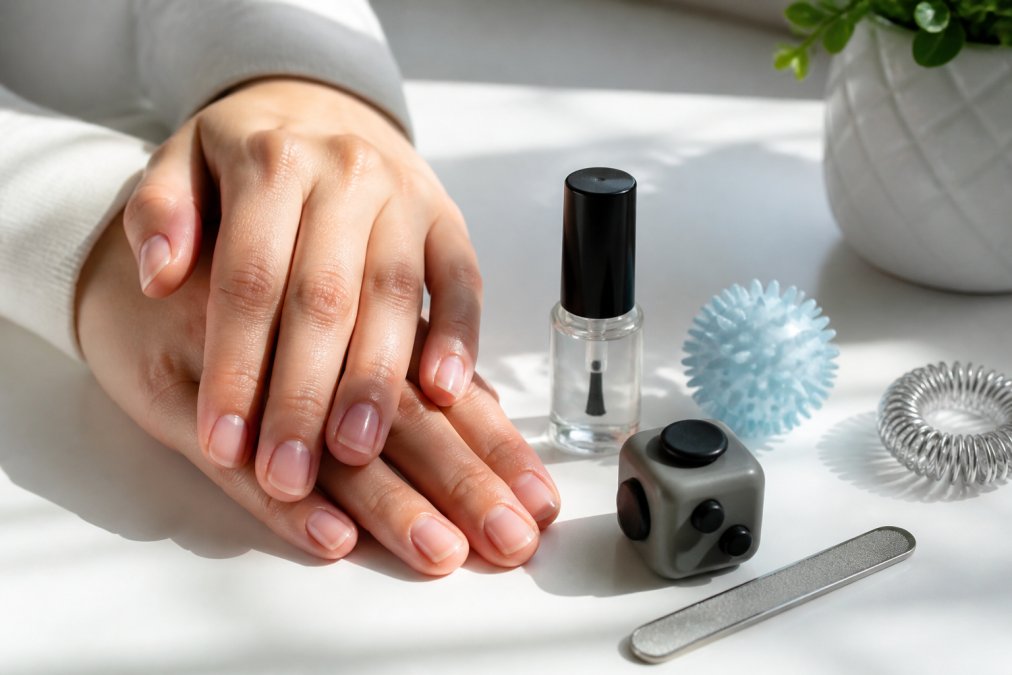
Bitter-tasting polishes and topical solutions
Bitter-tasting nail products create an immediate, unpleasant sensory consequence for biting. When you taste something bitter, your brain begins to associate nail biting with that negative sensation. Over time, this reduces the urge to bite.
NIXXIT offers bitter-tasting solutions specifically formulated to deter nail biting in both children and adults, designed to stay on your nails through daily activities while delivering a strong deterrent when you bite. Bitter-tasting products work best as part of a comprehensive approach, not standalone. The deterrent interrupts the habit, but addressing the underlying trigger is what makes change stick long-term.
Fidget tools and sensory alternatives
If your nail biting is driven by sensory needs or needing something to do with your hands, fidget tools can be remarkably effective. Common alternatives include stress balls, textured fidget cubes, worry stones, or smooth river rocks. The key is finding something providing similar sensory satisfaction to nail biting.
Keep your fidget tool with you during times you're most likely to bite. If afternoon boredom triggers biting, keep one at your desk. If evening stress triggers it, keep one on your nightstand.
Keeping nails trimmed short
If there's nothing to bite, you can't bite it. Keeping nails very short reduces the surface area available and can make the habit less satisfying. Regular filing is also important, rough edges invite biting. Maintaining nails yourself prevents this trigger.
Step 3: Apply Habit Reversal Training Techniques
Habit reversal training (HRT) is a behavioral technique specifically designed to help people break repetitive behaviors like nail biting, with strong evidence supporting its effectiveness (peer-reviewed research).
The basic principle is to replace the unwanted behavior with an incompatible behavior, something you can't do while biting your nails. The replacement behavior should meet the same need as the original habit.
Identify the moment just before you bite, whether it's a specific feeling or situation. When you notice that moment, immediately engage in your replacement behavior instead of biting. This might be making a fist and holding it for 30 seconds, doing a hand exercise, using your fidget tool, or applying your deterrent. The replacement behavior should occupy your hands and attention for at least a minute, interrupting the automatic habit loop.
Positive reinforcement helps habit reversal training work better. When you successfully use your replacement behavior instead of biting, reward yourself in some small way, a check mark on a calendar, a few minutes of something you enjoy, or simply acknowledging the different choice.
Stimulus control also helps: removing or reducing exposure to triggers when possible. If stress at work triggers biting, take short breaks when stress builds. If boredom triggers it, plan activities or have your fidget tool ready.
How Long to Break Nail Biting Habit and Stay Nail Bite-Free
The timeline for breaking a nail biting habit varies significantly. For some people, the habit breaks within a few weeks. For others, particularly those who have bitten their nails since childhood, it can take several months.
Several factors influence timing: how long you've had the habit, how strong your triggers are, and how committed you are to using deterrents and replacement behaviors consistently. Most people see noticeable improvement within 2-4 weeks if using deterrents consistently and practicing habit reversal training.
Around week 6-8, many people experience a relapse cycle when the novelty wears off and the old habit reasserts itself. Understanding that relapse is common and normal, not a sign of failure, helps you get through this phase. If you relapse, restart immediately without shame. Each time you successfully use a replacement behavior, you're rewiring your brain.
Staying nail bite-free long-term requires maintaining awareness. Even after months without biting, you might feel the urge return during stressful periods. Having your deterrents and replacement behaviors available as maintenance tools helps prevent full relapse.
Repairing Damaged Nails and Cuticles After Biting
Once you've stopped biting, you'll want to repair the damage. Nails grow approximately one-tenth of an inch per month, so it can take 3-6 months to grow out completely healthy nails (the American Academy of Dermatology). During this time, proper nail care accelerates healing.
Keep your nails moisturized with cuticle oil or hand cream. Apply daily, particularly to the nail bed and surrounding skin. Avoid harsh chemicals and excessive water exposure, wear gloves when doing dishes or cleaning. Keep nails trimmed and filed smooth to prevent snagging and breaking.
If you have significant damage to the nail bed or signs of infection (redness, swelling, pus), see a dermatologist. In most cases, with consistent care, nails will grow back healthy and strong.
Cuticles often suffer significant damage from nail biting. Keep them moisturized with cuticle oil and avoid picking or biting at them. If you get regular manicures, ensure the technician is gentle with your cuticles. Healthy cuticles are protective, sealing the nail and preventing infection.
During the healing phase, as your nails grow out healthy and strong, the cosmetic improvement reinforces your commitment to the new behavior. This positive feedback loop helps maintain the habit change long-term.
Breaking the nail biting habit is challenging, but absolutely possible. The combination of understanding your triggers, using effective deterrents, practicing habit reversal training, and giving yourself time to heal creates a comprehensive approach addressing both the behavior and underlying needs.
NIXXIT was founded by someone who lived with chronic nail biting and understands how frustrating and shameful the habit can feel. Our products are designed to provide the deterrent support you need while you work on behavioral changes that make the difference stick. Whether you're looking for a bitter-tasting solution, a comprehensive kit, or guidance on the process, NIXXIT offers tools specifically formulated for both children and adults. Start your journey toward healthier nails and renewed confidence in your hands today.
Frequently Asked Questions
How long does it actually take to break the nail-biting habit?
Breaking onychophagia typically takes 2-3 months with consistent effort, though this varies based on how long you've been biting and how committed you are to the process. Some people see results in 4-6 weeks, while chronic nail biters may need 6 months or longer. The key is using multiple strategies together, deterrents, habit reversal training, and trigger identification, rather than relying on one method alone. Progress isn't always linear; expect occasional relapses as part of the learning process.
What are the most effective nail biting deterrents to use?
Bitter-tasting polishes and topical solutions are among the most effective deterrents because they create an immediate negative association with biting. Fidget tools and sensory toys help satisfy the need for tactile stimulation without damaging your nails. Keeping nails trimmed short reduces the temptation and makes biting less rewarding. The best approach combines multiple deterrents: use a bitter polish during the day, keep nails short, and have a fidget tool nearby when stress hits. Experiment to find what works best for your specific triggers.
Can habit reversal training really help stop chronic nail biting?
Yes. Habit reversal training is a behavioral therapy technique proven to address onychophagia by breaking the unconscious loop of biting. It works by teaching you to recognize the early warning signs of biting, understand your triggers, and replace the habit with an incompatible behavior, like clenching your fists or using a fidget tool. This method is especially effective for people who've been biting since childhood because it rewires the automatic response rather than just applying a deterrent. Combining it with stimulus control (removing triggers) and positive reinforcement increases success rates significantly.
Is nail biting related to anxiety, ADHD, or sensory processing issues?
Nail biting can be connected to anxiety, stress, and sensory regulation needs, though it's not exclusively linked to any single condition. Some people bite nails as a self-soothing mechanism during anxiety; others use it for tactile stimulation or impulse control. Sensory processing differences may make biting feel more rewarding or necessary. If you suspect an underlying condition like anxiety disorder or sensory processing challenges, talking with a healthcare provider can help address the root cause alongside breaking the habit itself. Regardless of the cause, the deterrents and behavioral strategies in this guide work across all situations.
This article was written using GrandRanker